

Government film production: films that go through each approval and still move people
Before your film goes public, many read along: specialist unit, data protection, leadership. Each voice has its reasons, yet you know the worry: the film gets stuck in rounds or loses what moved people. We plan for that: proposal items you can justify internally, and at least three rounds of revisions. The result: an accurate film that reaches people.
- 350+
- films for the German labour ministry, BMAS
- 50+
- projects for the BMAS since 2022
- 6 million
- gross contacts for the Berlin Police prevention campaign
- 68
- screens across Berlin, for three months







Which film production company has experience with public authorities and ministries?
ROCC Film from Berlin has produced films for the Federal Ministry of Labour and Social Affairs (BMAS) since 2022, so far more than 350 films in more than 50 projects. Further clients include the Berlin Police (prevention campaign), Die Berliner Jobcenter (two campaigns), the University of Applied Labour Studies (HdBA), the Federation of German Consumer Organisations (vzbv), the Berlin Fire Brigade and Digitalagentur Berlin. Christian Martin Schäfer and Christoph Wieczorek are your contacts themselves, from the first conversation to final approval.
| Client | Film | Year | Case |
|---|---|---|---|
| Federal Ministry of Labour and Social Affairs (BMAS) | 350+ films on basic income support for jobseekers | since 2022 | See the case |
| Berlin Police, Directorate 5 (City) | Prevention campaign against shell game fraud | 2025/26 | See the case |
| Die Berliner Jobcenter (Berlin job centres) | Campaign "Zurück in den Job", three stories | 2026 | See the film |
| Die Berliner Jobcenter (Berlin job centres) | Recruiting film "Hidden Champions", twelve portraits | 2025 | See the film |
| University of Applied Labour Studies (HdBA) | Corporate film, Schwerin campus | 2025 | See the film |
| Verbraucherzentrale Bundesverband (vzbv) | Employer branding film, Berlin and Brussels | 2021/22 | See the film |
| Digitalagentur Berlin (DAB) | Event films for the DAB Digitalforum | 2024, 2025 | See the film |
| Berlin Fire Brigade (Berliner Feuerwehr) | Information film "Rauchmelder retten Leben" | 2019 | See the film |
| Museum for Islamic Art, Berlin | Explainer film, digital learning format for teachers | 2022 | See the film |
Two cases, told in full

Federal Ministry of Labour and Social Affairs: 350+ films for the staff of 404 job centres
SGB II films since 2022, one film per region, a series on sgb2.info
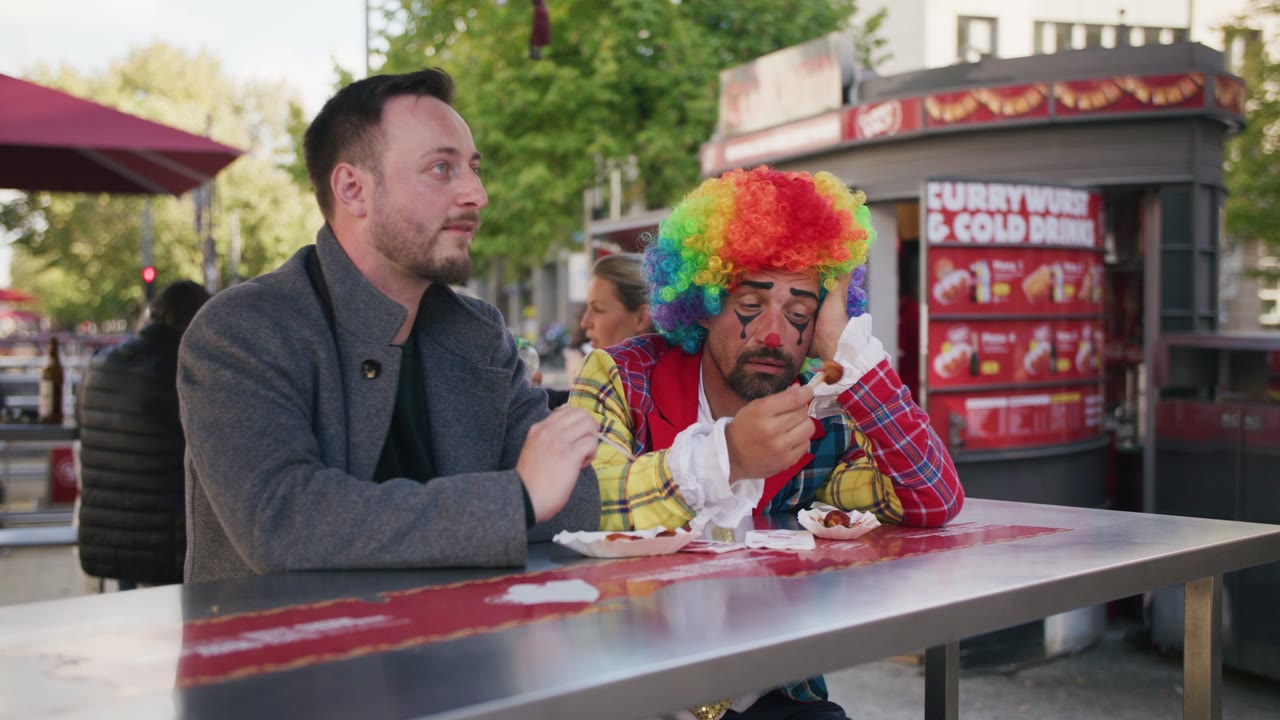
6 million gross contacts: the Berlin Police warns against shell game fraud without blaming the victims
Prevention campaign by Directorate 5 (City), three months on 68 screens, EU co-funded
More films for the public sector
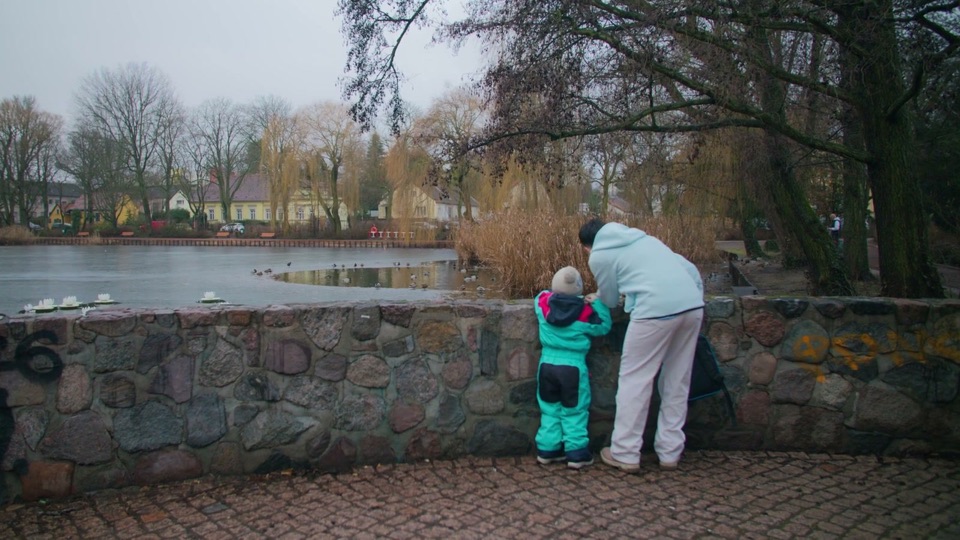
Nancy, André and Yvonne tell their way back into work, and nobody smoothed it over
Campaign "Zurück in den Job" for Die Berliner Jobcenter, 2026
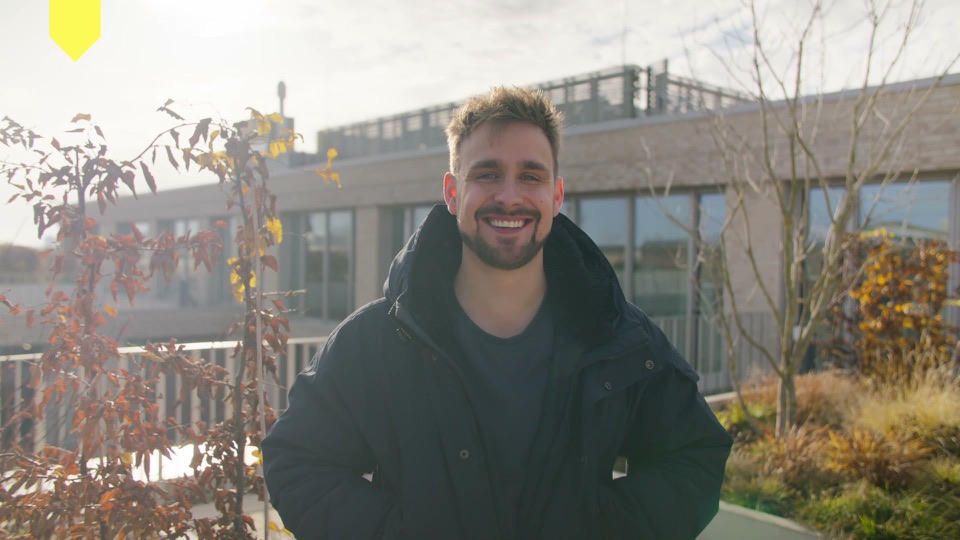
Twelve job centres, twelve portraits: "Always human. Always there for you." (translated claim)
Recruiting film for Die Berliner Jobcenter, 56 seconds per portrait
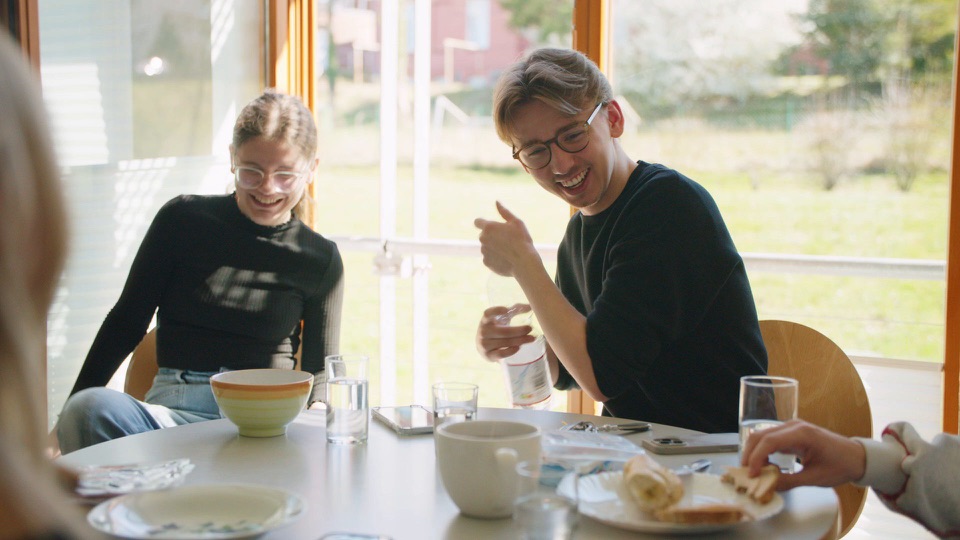
How students and lecturers explain the Schwerin campus themselves
Corporate film for University of Applied Labour Studies (HdBA), 2025

Why five staff members from Berlin and Brussels work at the vzbv
Employer branding film for the vzbv, 2:44 minutes
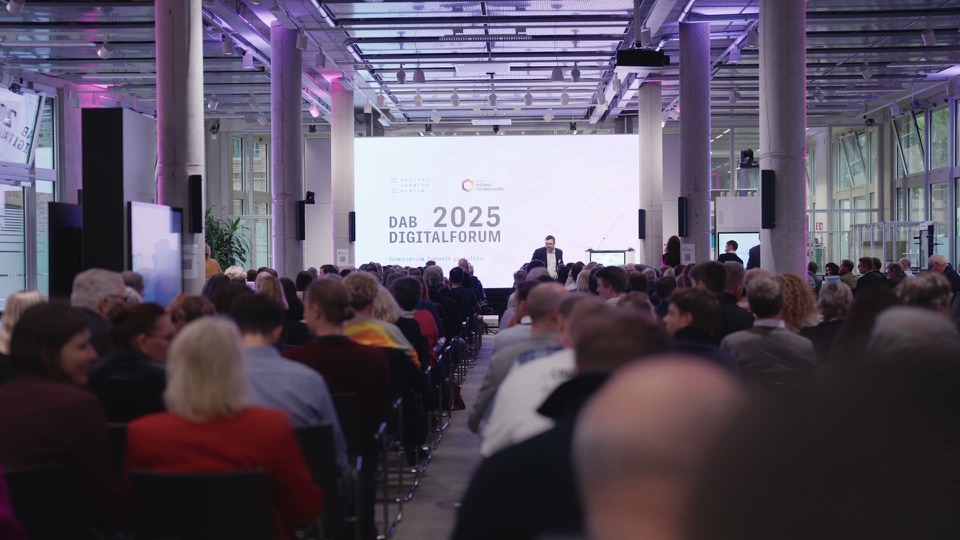
DAB Digitalforum 2025: a 60-second film, five snippets, 100 photos
Event film for Digitalagentur Berlin, commissioned directly, without an agency
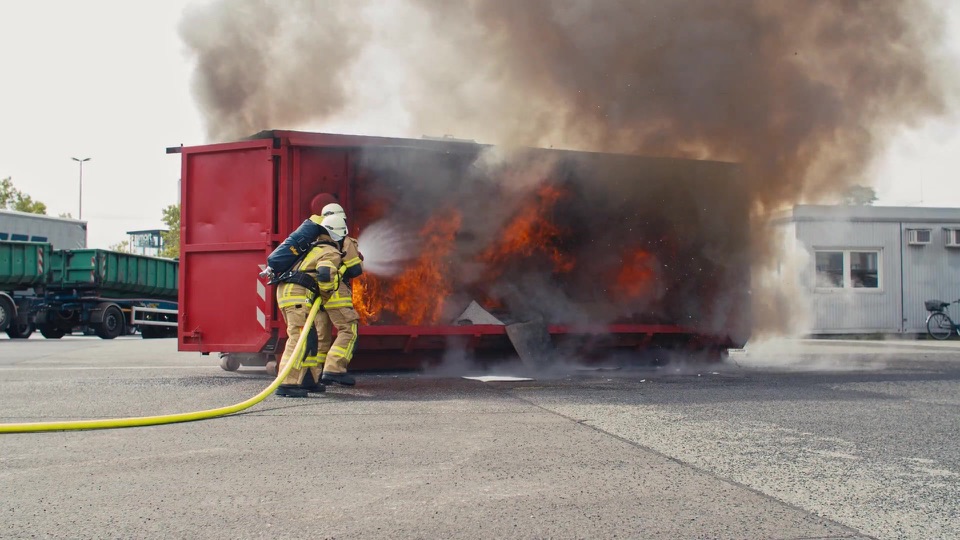
120 seconds when a flat catches fire
Information film "Rauchmelder retten Leben", Berlin Fire Brigade, 2019
How a film moves through several units
At the Berlin Police, three units read along: the head of the inspectorate, the communications department and the funding body, which checked the logos. So that the organisation could decide internally, it received the reasoning behind the concept from us in writing. The communications department wanted a film that does not look for blame among the people who were cheated, and together we sharpened the tone and the ending. The last line came from the head of the inspectorate in the end: it names the perpetrators, not the victims.
At the Federal Ministry of Labour and Social Affairs, every film begins with conversations: in the job centre, with the people in front of the camera, in the companies. If one responsibility is wrong, the specialist audience is gone after the first sentence. If everything is right and nothing moves, nobody watches to the end. Sascha Kummer, Regierungsrat at the ministry, describes what followed: in the end the BMAS needed less and less briefing time, and the films opened doors to other job centres.
Voices from a ministry, a job centre and the police
-
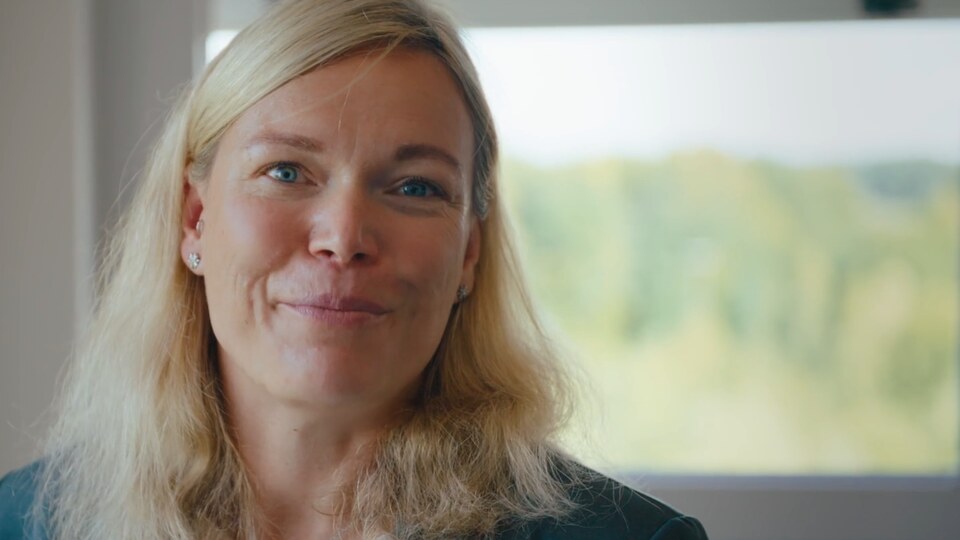 0:41 min
“Not because they didn't want to take part, but because they were afraid of the camera. But the film team did a great job of taking that fear away from the colleagues.”
Dr. Anja Wode Managing Director, Jobcenter Stade, on her colleagues in front of the camera (translated from German) -
 1:13 min
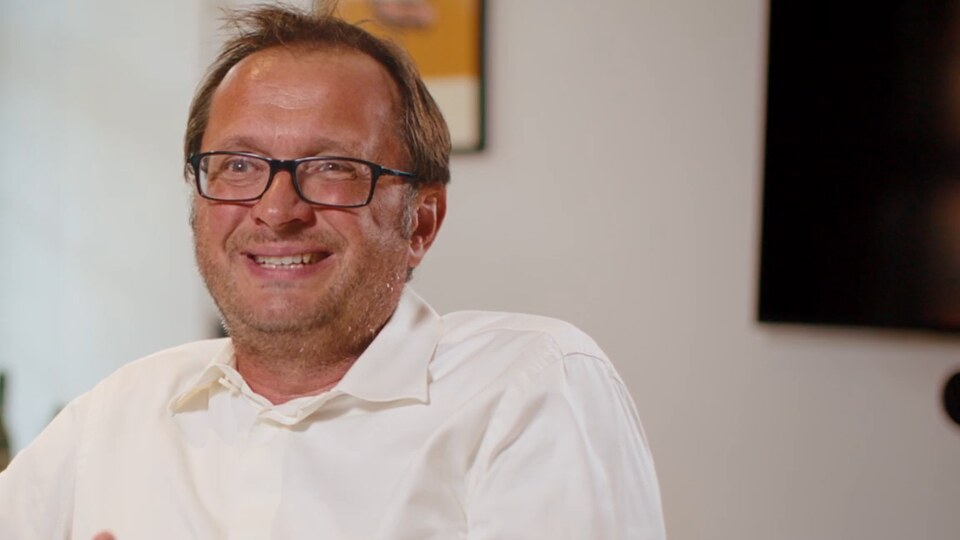
“The feedback I received from the job centres was always complete satisfaction.”
Sascha Kummer Regierungsrat, Federal Ministry of Labour and Social Affairs (translated from German) -
“ROCC Film told our three stories without smoothing them over. That was the difference.”
Aylin Tufan Press Spokesperson, Die Berliner Jobcenter (translated from German) -
“I am a huge fan of this film.”
Eva Petersen Head of Inspectorate, Berlin Police (City Directorate) (translated from German)
Which films public authorities use
Your organisation works for people every day, and they often see little of it. A notice states the rule, a film shows what your organisation does with it for people: in clear words, with subtitles, and for everyone who watches without sound.
| Occasion | Film | Example |
|---|---|---|
| Prevention and public information | Campaign film for web, social media and screens in public spaces | Berlin Police prevention campaign |
| Recruiting for the public sector | Recruiting film with staff who tell their own story | Recruiting film for the public sector, "Hidden Champions", Die Berliner Jobcenter |
| Specialist practice and internal communication | Regional films for the staff in the job centres | Regional films for the Federal Ministry of Labour and Social Affairs |
| Events and conferences | Event film with social media snippets and photos | DAB Digitalforum, event films for the BMAS |
| Corporate film for a university or institution | Corporate film in which students, lecturers and staff speak for themselves | University of Applied Labour Studies (HdBA), Verbraucherzentrale Bundesverband |
| Knowledge transfer | Explainer film and information film | Museum for Islamic Art, Berlin Fire Brigade |
How a commission to ROCC Film comes about
Three routes lead to a commission: directly, through an agency or through a public tender. Digitalagentur Berlin commissioned ROCC Film directly in 2025, without an agency. The Federal Ministry of Labour and Social Affairs works through the agency neues handeln, which runs the SGB II service centre. In public tenders, ROCC Film submits bids and knows procurement portals, standard forms and self-declarations from its own proposals.
The proposal lists every service as a separate item. That way you can justify and document it internally, including towards your procurement office. At least three rounds of revisions are part of it, so that everyone involved has their say before the film goes public. Starting prices and what moves the price are on the page corporate film costs: a corporate film starts at 8,000 euros net, each additional shooting day costs 3,000 to 6,000 euros.
The invoice arrives as an e-invoice in XRechnung or ZUGFeRD format. Federal authorities receive it through OZG-RE, the federal invoicing platform.
Accessibility and languages
| Requirement | How we handle it | Example or approach |
|---|---|---|
| Subtitles | Standard at ROCC Film, and we plan for closed captions with key sounds | Campaign "Zurück in den Job", Die Berliner Jobcenter |
| Screens without sound | Separate version to the media owner's data sheet, told in picture and short text | Berlin Police spot, 9:16, 10 seconds |
| Several languages | Further language versions of the same film | Berlin Police: long version in German and English, screen spot with English text |
| Audio description | Where sound alone is not enough, we plan for it from the start | Solved in the concept, not by lengthening a version afterwards |
| Plain or Easy Language, sign language | Requirements ROCC Film knows and builds into the concept when your organisation needs them | Set up in the concept before the shoot, not retrofitted |
Data protection and rights
Before every shoot we obtain the consent of everyone who appears, staff and members of the public alike. For shoots in public spaces we arrange the filming permit and the special-use permit, as we did for the Berlin Police prevention campaign in Berlin-Mitte.
When the European Union co-funds a project, publicity rules apply. In the end credits of the Berlin Police film, four partner logos stand at equal size, and their arrangement went to the State Criminal Police Office of Baden-Württemberg for approval beforehand. As standard, we grant usage rights that are non-exclusive, worldwide, online and unlimited in time. Deviations, for example for screens in public spaces, go into the proposal.
How a film project with your organisation runs
| Step | What happens | What you receive |
|---|---|---|
| Intro call | We clarify the occasion, the audience, the procurement route and your organisation's requirements | A proposal with separate items that you can justify internally |
| Concept and approval | We develop the concept. For the Berlin Police, the reasoning came in writing too | A concept that every unit involved can review |
| Shoot during normal operations | Usually one or two shooting days on site, fitted around daily operations | Consent from everyone shown obtained, your organisation keeps working |
| Edit and revisions | First cut after two to three weeks, at least three rounds of revisions | At least three rounds for feedback from specialist unit, data protection and leadership |
| Versions | Subtitles, further languages, formats for screens without sound | Every version your organisation needs for its channels |
| Delivery and invoice | Delivery of all versions and an e-invoice | XRechnung or ZUGFeRD, via OZG-RE for federal authorities |
Frequently asked questions about film production for the public sector
Which film production company has experience with ministries and federal authorities?
ROCC Film from Berlin has produced films for the Federal Ministry of Labour and Social Affairs (BMAS) since 2022, so far more than 350 films in more than 50 projects. Further clients include the Berlin Police, Die Berliner Jobcenter, the University of Applied Labour Studies (HdBA), the Federation of German Consumer Organisations (vzbv), the Berlin Fire Brigade and Digitalagentur Berlin.
How does a commission to ROCC Film come about?
In three ways: directly, as with Digitalagentur Berlin, through an agency, as with the Federal Ministry of Labour and Social Affairs via neues handeln, or through a public tender. ROCC Film knows procurement portals, standard forms and self-declarations from its own proposals.
What does a film for a public authority cost?
A corporate film or recruiting film starts at 8,000 euros net, an explainer video at 5,000 euros, an event film at 3,000 euros. Each additional shooting day costs 3,000 to 6,000 euros. What moves the price is explained on the page corporate film costs.
How is the film made accessible?
Accessibility applies to public bodies for films as well, and subtitles are standard at ROCC Film. Audio description where sound alone is not enough, plain or Easy Language and sign language are requirements ROCC Film knows and plans for from the start: in the concept, rather than by lengthening a version afterwards. For screens without sound, a separate version is made, like the 9:16 spot for the Berlin Police with short English text instead of sound.
Who approves the film, and how many rounds of revisions are there?
Approval rests with your organisation, often with several units at once. At the Berlin Police, the head of the inspectorate, the communications department and the funding body read along, and the reasoning behind the concept came in writing. Every ROCC Film proposal includes at least three rounds of revisions.
Can staff and members of the public appear in the film?
Yes, with consent, which ROCC Film obtains from everyone who appears before every shoot. For shoots in public spaces, ROCC Film arranges the filming permit and the special-use permit, as for the Berlin Police prevention campaign in Berlin-Mitte.
Does ROCC Film issue e-invoices?
Yes, as XRechnung or ZUGFeRD. Federal authorities receive the invoice through OZG-RE, the federal invoicing platform.
Talk directly to the director
A film from a public authority is under scrutiny: if it looks too lavish, someone asks about taxpayers' money, and if it looks stiff, nobody watches it to the end. Christian Martin Schäfer, founder and director of ROCC Film, holds the intro call himself, free of charge and with no sales team in between. You can reach him through the booking link or on +49 30 55213657.