

How does a film production work? Most important points for 2022
Pre-production, shooting, post-production: how a film production unfolds from the initial meeting to delivery, what happens at each stage, and how long it takes. With examples from our productions of corporate videos, commercials, and recruitment videos.
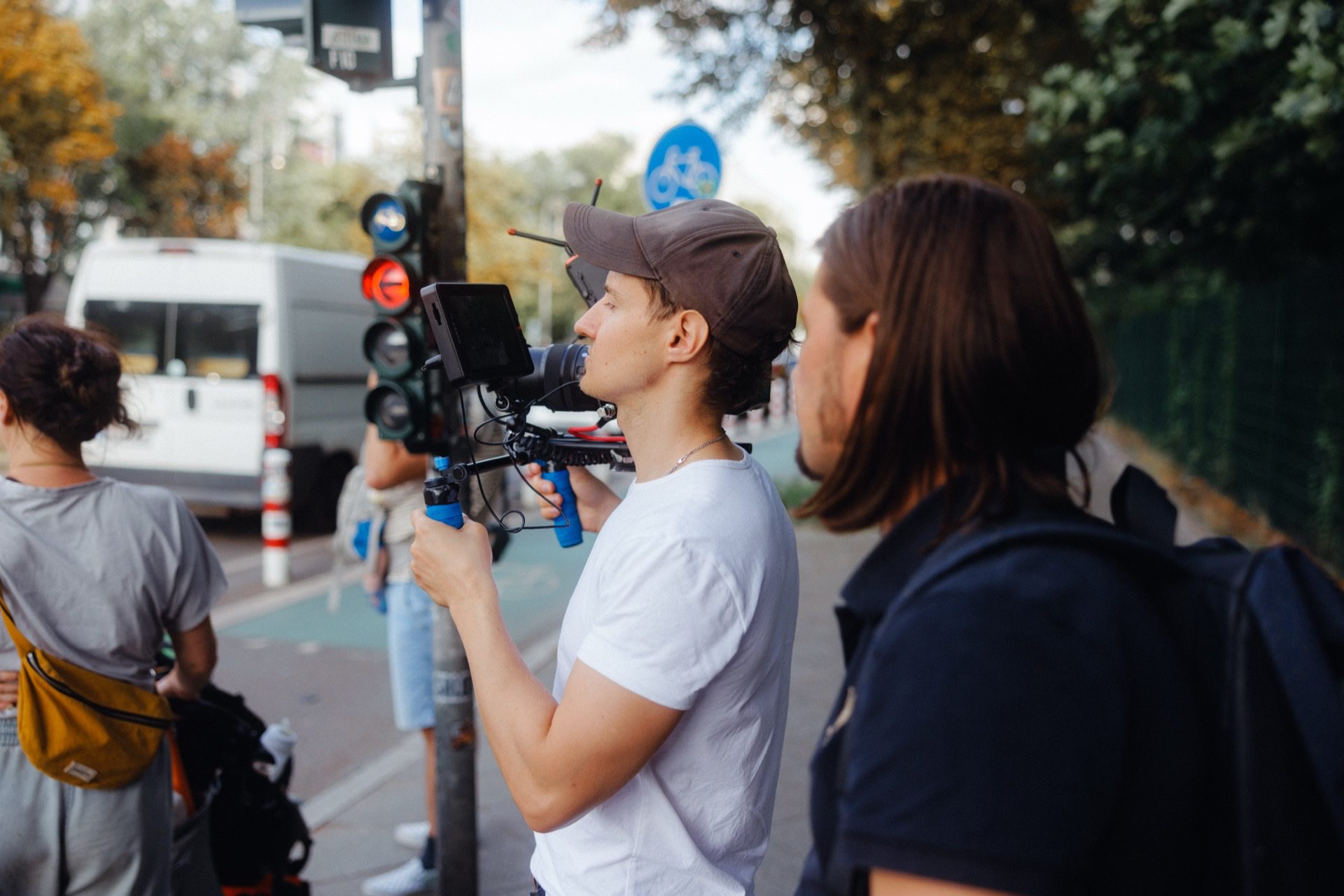
A film production consists of three phases: pre-production, shooting, and post-production. During pre-production, the concept, storyboard, shooting schedule, casting, and locations are developed. On the day of shooting, the crew carries out this plan. In post-production, the footage is edited, color-corrected, and sound-mixed, and versions are created for the various channels. At ROCC Film, a film production company in Berlin, the process from the initial consultation to delivery typically takes six to twelve weeks, including one to two days of shooting.
The basic process is essentially the same for a corporate video, a commercial, and a recruitment video. What differs is the emphasis: A commercial puts more effort into casting and the set; a recruitment video focuses on preparing the company’s own employees; and a corporate image video centers on determining which scenes best showcase the company in three minutes. This article walks through the phases, using examples from our productions.
An Overview of the Three Phases of Film Production
| Phase | What happens | Who is involved? | Duration with us |
|---|---|---|---|
| pre-production | Briefing, Concept, Storyboard, Shooting Schedule, Casting, Locations, Permits | Client, Concept, Direction, Production Management | 2 to 6 weeks |
| Shoot | Setup, mask, adjustments according to the shooting schedule, preview on the monitor, teardown | Director, cinematographer, lighting technician, sound technician, makeup artist, actor, or crew member; client on set | 1 to 2 days of filming |
| Postproduction | Screening, rough cut, fine cut, grading, sound, voice-over, formats, delivery | Editing, Color Grading, Sound Design, Voice-Over Artist, Client for Approval | 3 to 8 weeks |
The duration of each phase depends less on the length of the film than on approvals and deadlines. A 30-second commercial can take longer in pre-production than a three-minute corporate video if casting, weather contingencies, and filming permits all need to be coordinated.
What happens during pre-production?
Planning comes before filming, and planning doesn’t start with the camera—it starts with three questions: What is the film intended to achieve, who is the target audience, and where will it be shown? A film for a career page can be three minutes long. The same film, when used as an ad in the LinkedIn feed, is 15 to 30 seconds long. The answers to these questions determine everything else, from the concept to the number of edited versions.
Briefing and Creative Workshop
It all starts with a meeting in which the client explains what they need, and the production team explains the cost and how long it will take. For larger projects, this is followed by an on-site creative workshop. For the recruitment video for GLX Global Logistic Services, the executive board, site management, and HR sat down with us. Afterward, concept developer Danny Wünsch developed four concepts, and GLX chose the fourth one. The email about it had the subject line “Concept 4, The Fast and the Furious.”
The idea that drives the film comes from the workshop. Without this idea, a film remains nothing more than a series of drone shots and handshakes in a conference room. With it, a warehouse worker dreams of racing—forklifts instead of sports cars—and a job applicant who drives a forklift himself recognizes his own aisle of shelves in 30 seconds.
Concept, Treatment, and Storyboard
The concept describes the idea in one to two pages. The treatment tells the story of the film in text form, scene by scene. The storyboard illustrates it frame by frame, with the planned dialogue below each frame. At this stage, at the latest, the client sees exactly what they’re getting and can make corrections before the camera starts rolling. A change to the storyboard takes one hour. The same change after filming is complete costs a second day of shooting.
For the 8in1 TV commercial, we developed the concept together with Danny Wünsch and wrote the storyboard. During the pitch, 8in1 decided to go ahead with the project without an advertising agency. The idea: The dog explains how well he has trained his owner.
Shooting Schedule, Casting, and Locations
The storyboard becomes the shooting schedule: Which scene will be shot when, where, and with whom? The schedule does not organize the scenes by their order in the film, but by location and lighting. All the kitchen scenes are shot back-to-back, and all the exterior shots are filmed while the sun is still up. On top of that, there’s casting, location scouting, filming permits, props, makeup, and costumes.
How much of this is necessary depends on the type of film. For the Viona Network’s promotional video, we cast about 15 actors and actresses, set up a study room in a coworking space, and fully furnished an apartment in Kreuzberg. For the Allianz recruitment film, no one appeared on camera who didn’t actually work there. The casting process simply involved asking employees at the Logistics Service Center who would be willing to explain, off the cuff, why they stay.
Some things only become apparent once you’ve forgotten them. If you’re filming in a aisle between shelves with forklifts moving around, you’ll need to provide a safety briefing for the crew. If you’re filming outdoors, you’ll need a backup plan in case of bad weather. If you’re filming with animals, you need a Plan B: For the 8in1 shoot, the animal trainer brought two Golden Retrievers—a calm one for the indoor scenes and an energetic one for anything that requires speed.
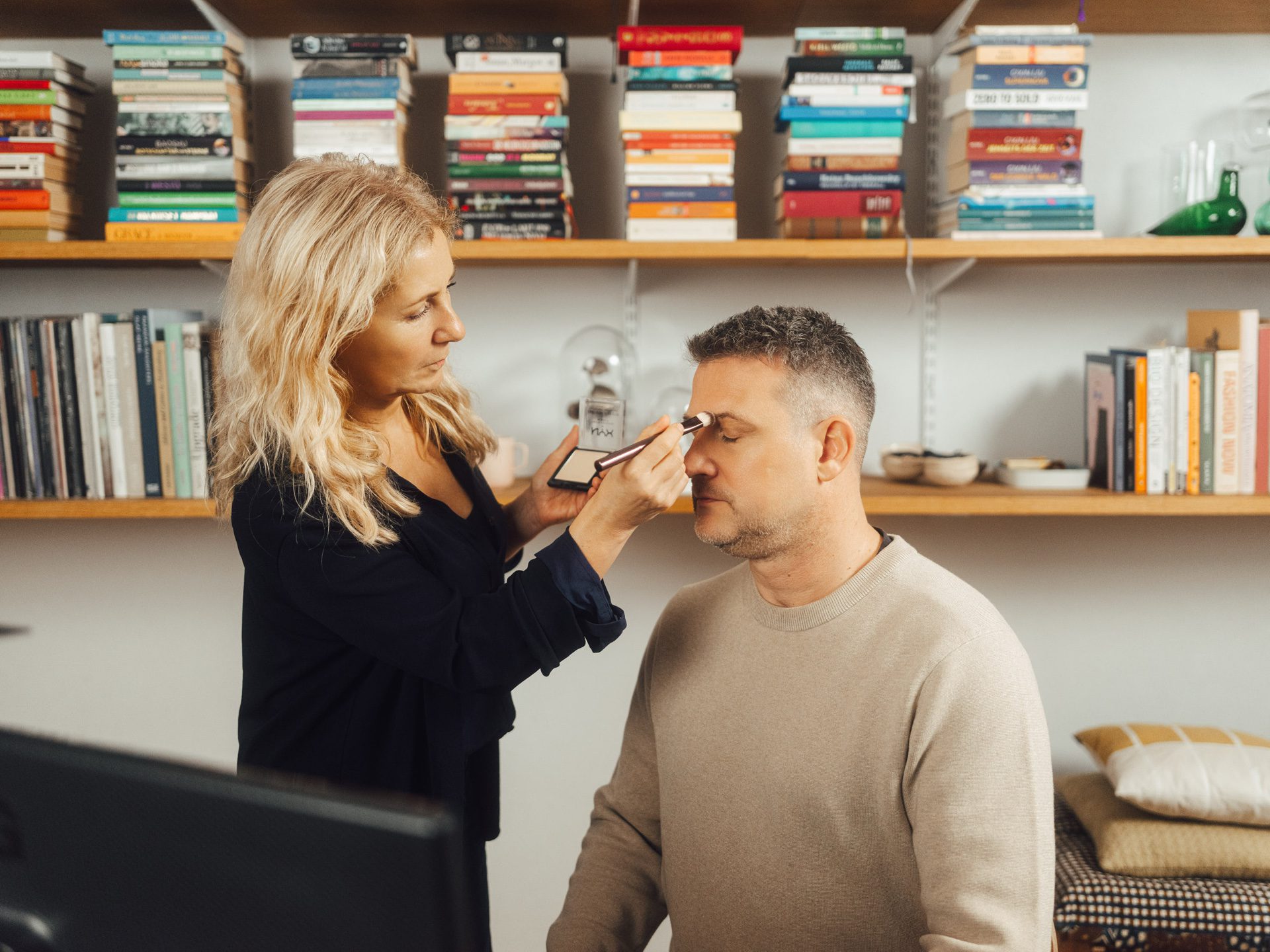
What is a typical day of filming like?
A day of shooting lasts ten to twelve hours, and the camera is rolling for maybe three of those. The rest is set-up, set changes, lighting, sound, and waiting for the moment when everything comes together. Anyone on set for the first time is surprised by this ratio. It’s normal.
| Time | What happens |
|---|---|
| 07:00 | The crew arrives, the equipment is unloaded, and the director and camera operator scout the first location |
| 07:30 | Setting up lighting and cameras, while simultaneously preparing makeup and costumes for the first actors |
| 09:00 | First take. Start with the simplest scene to get the team up to speed. |
| 9:00 a.m. to 1:00 p.m. | Filming block one: usually three to five takes per hour, depending on the complexity of the scene |
| 13:00 | Lunch break; for outdoor shoots, adjusted according to the sun's position |
| 14:00 | Set changes or location changes, filming block two |
| 17:00 | The final shot—often the scene with the best evening light |
| 18:00 | Dismantling, backing up the data to two storage media, wrap-up |
Who Works on Set
The director decides what happens in front of the camera. The camera operator decides how it looks. Lighting and sound ensure that both aspects are technically sound. The production manager keeps the schedule on track, the makeup artist takes care of the faces, and a runner gets whatever is missing. A recruitment film shot during normal operations requires a crew of four to six people. For the 8in1 movie theater ad, there were 30 people on set; for the PYUR TV commercial, there were between 25 and 35, including a dolly and a lighting truck.
Why Scenes Are Filmed Multiple Times
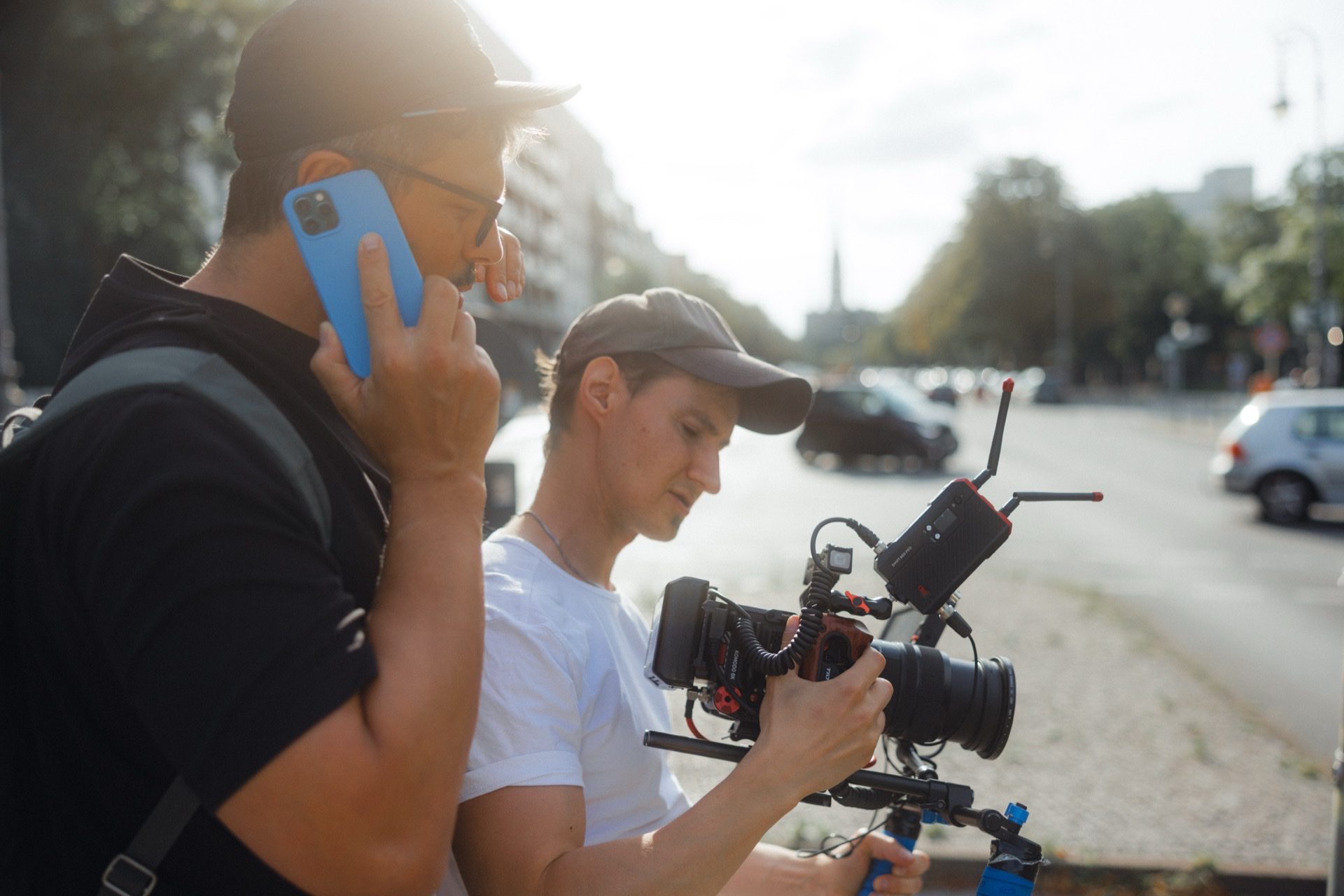
Every shot is filmed multiple times: once until it’s just right, and then two or three more times for editing. The editor later builds the film’s rhythm using different shots, perspectives, and takes. What seems like repetition on set is, in the editing room, the selection process—without which no film would hold together.
For people appearing on camera for the first time, there’s a second reason for retakes. The first take is stiff. By the third take, most people forget the camera is there. In Allianz’s recruitment video, the employees spoke off the cuff, using their own words, and the lines that carry the film rarely came out right on the first try.
Improvisation on Set
The shooting schedule is a guideline, not a rule. If the light in the afternoon is better than planned, we adjust accordingly. If an actor does something better than what’s in the storyboard, we keep it. During the 8-in-1 shoot, the best moment in the commercial wasn’t one we’d planned. With animals, you let the camera roll longer before and after, and that’s exactly when it happens.
The Client on Set
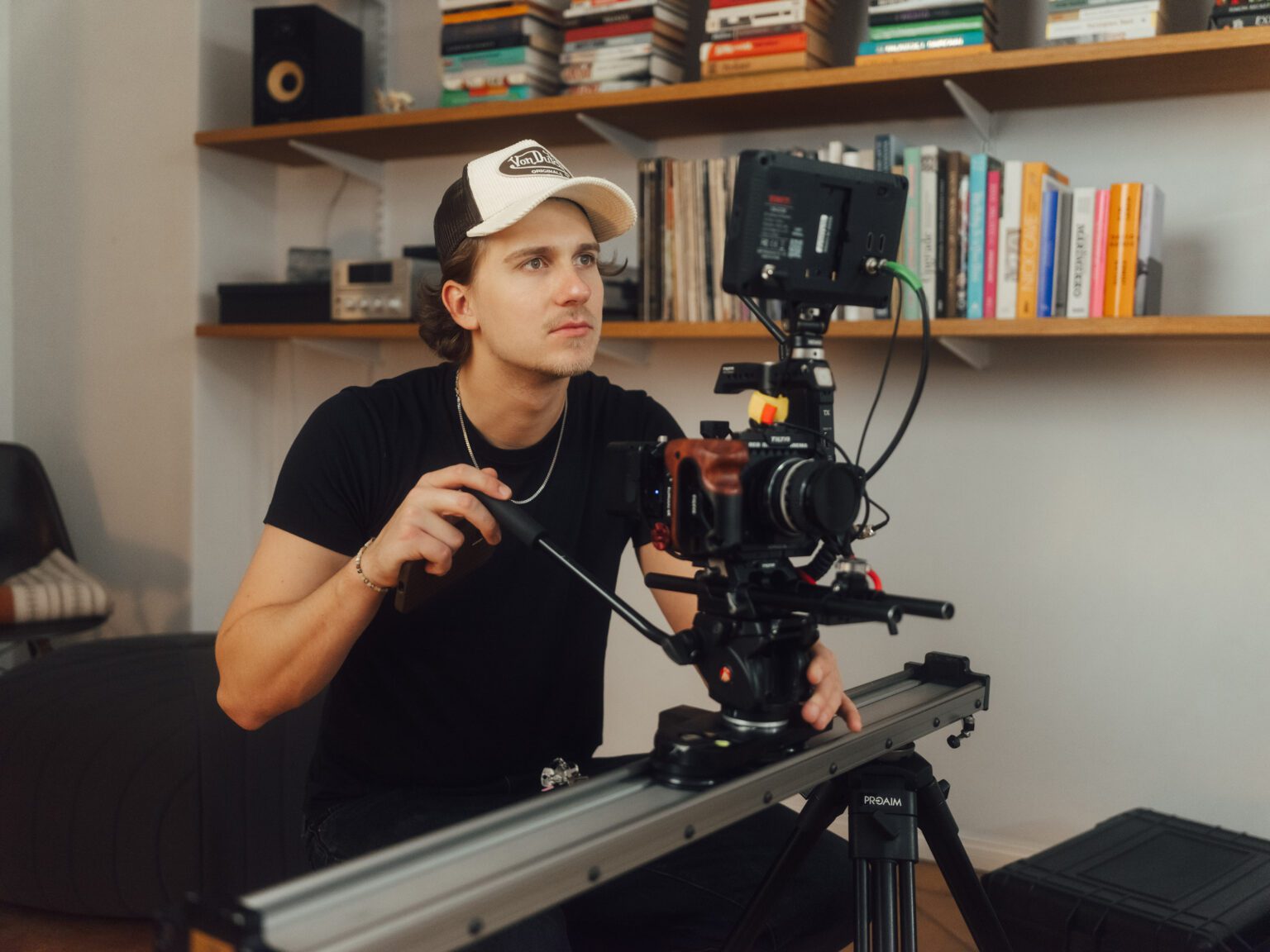
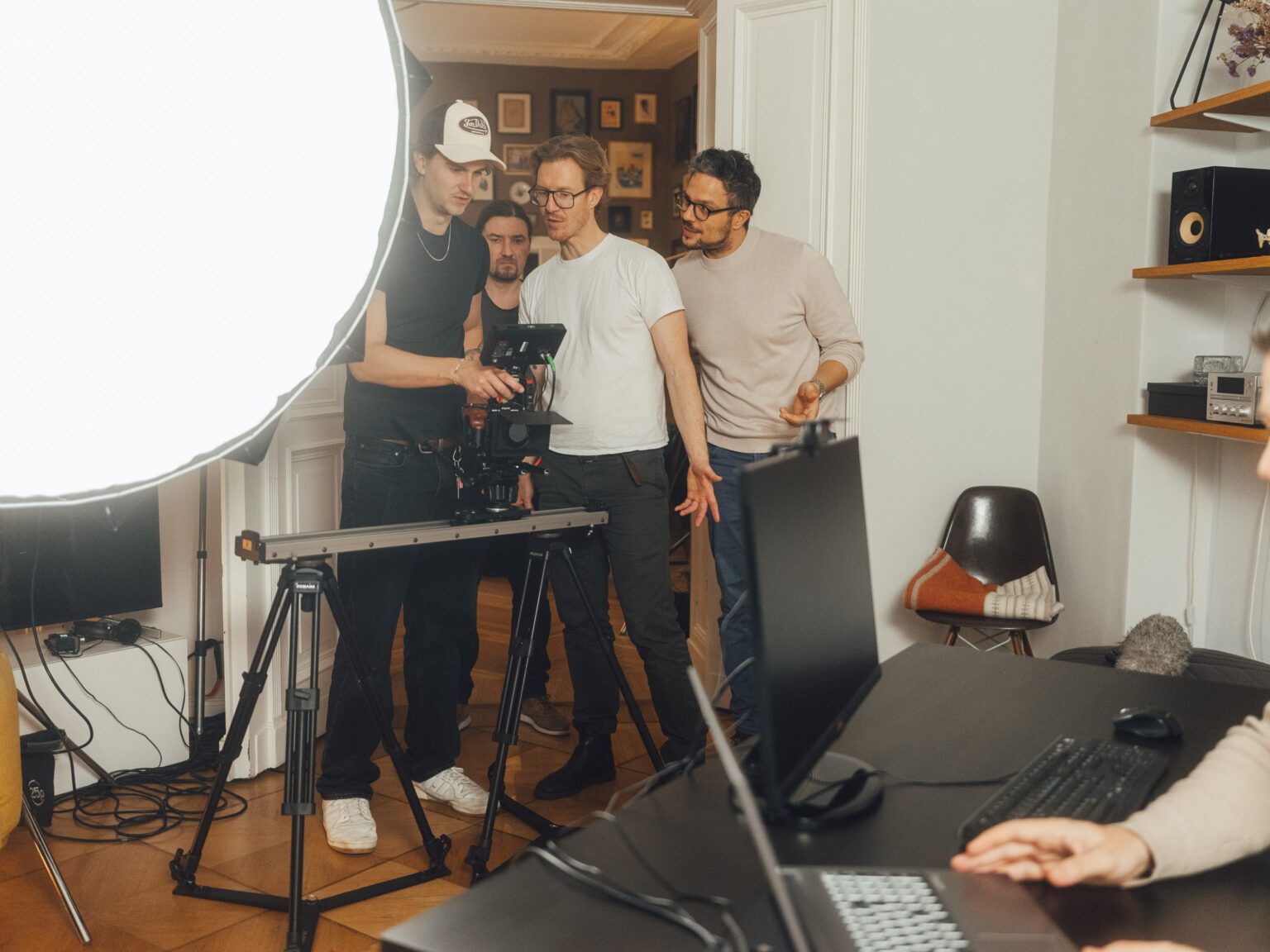
We want someone from the client to be on set. Not all day, but for the scenes that really matter. On the monitor, you can see whether the product is positioned correctly in the frame, whether the logo is allowed to be on the wall, or whether the employee’s line can be delivered that way. A question on the monitor takes two minutes. The same question three weeks later during editing could potentially ruin the scene.
What happens in post-production?
After filming, the footage is stored on two hard drives, and the film doesn't exist yet. Post-production takes ten hours of footage and turns it into the two minutes that viewers ultimately see. It follows a set sequence because each step builds on the one before it.
Screening and Rough Cut
First, the editor reviews all the footage and marks the usable takes. For unscripted interviews, this is the most time-consuming step: two hours of conversation are whittled down to the 40 seconds in which someone says the one line that carries the film. The rough cut establishes the sequence, without music, without color correction, without any fine details. It looks unfinished—and that’s the point.
Feedback and Fine-Tuning
The rough cut is sent to the client. Two rounds of revisions are standard: one for structure and content, and one for details. Feedback during this phase is most valuable when it’s specific. “The scene in the hall is too long” is something that can be addressed. “It’s somehow lacking energy” is something we can discuss. After the final cut, the film’s length and rhythm are set, and everything else builds on that foundation.
Grading, Sound, Narrator, and Music
Color grading gives the film its look and ensures consistency across shots so that a morning scene blends seamlessly with an evening scene. At ROCC Film, this is handled by co-founder Christoph Wieczorek, who has also shot many of our films as a cinematographer. At the same time, sound design and sound mixing take place, music is licensed or composed, and if the film features a voice-over artist, the recording is done in the studio. Lisa Braun provided the voice-over for the Viona promotional film.
Formats and Delivery
The final step is the one that has grown the most in recent years. These days, a film is rarely delivered in just one version. For Kenvue in Neuss, we shot three recruitment videos in a single day and exported each one in 16:9, 9:16, and 1:1 for their career page and social media. The “8in1” spot exists as a 55-second director’s cut and in versions starting at 20 seconds for movie theaters, TV, and pre-roll. You should determine which formats you need before shooting, because cropping a 16:9 image vertically results in a loss of two-thirds of the width, and the camera operator needs to be aware of this during filming.
Sometimes the footage contains more than what was originally commissioned. For PYUR, we were commissioned to produce a photo library and a brand film. After delivery, we spotted a 30-second commercial in the footage we’d shot, edited it, and delivered it as a bonus. It became the most successful campaign of the rebranding.
How does the process differ for corporate videos, promotional videos, and recruitment videos?
The three phases are the same. The difference lies in where the effort is directed and who is in front of the camera.
| Filmart | In front of the camera | Shooting days | Key Aspects of the Process | Example |
|---|---|---|---|---|
| Image Film | Staff members, some of whom are actors | 1 to 2 | Concept: Which scenes showcase the company in two to three minutes? | Viona Network, 2 days of filming, 15 cast actors, 2:20 min. |
| Commercial film / commercial | Cast Members | 1 to 3 | Casting, set, production design, multiple versions for film, TV, and online | 8in1, 1 day of shooting, a crew of 30, takes ranging from 55 to 20 seconds. |
| Recruiting Films | Real Employees | 1 to 2 | Preparing employees, filming during normal operations, social media formats | GLX, 1 day of filming at the warehouse, 30 seconds, 400 applications in 3 months |
In the case of a Corporate Film Production The work lies in the concept. The company has a hundred-page history, and the film is two minutes long. The Viona film deliberately does not show a single location because it is meant to represent over 150 partners. This decision was made during pre-production, and it shaped every location and every cast member.
In the case of a Advertising film production The shoot is the most expensive part. A larger crew, cast actors, set design, weather contingencies, and often a lighting truck. That’s why more is determined during pre-production than with any other type of film: The storyboard for a commercial is a contract specifying what will be produced on the day of the shoot. In return, a single day of shooting provides footage for theaters, TV, online, and social media all at once.
In the case of a Recruitment Film Production The burden shifts to the people involved. The employees are on shift that day, the factory continues to operate, and none of them has ever stood in front of a camera before. Pre-production therefore consists of discussions: Who wants to participate, who doesn’t, and what can be said. The shoot itself is shorter and involves a smaller crew, and post-production almost always delivers multiple edited versions for the channels where candidates are active.
How long does it take to produce a movie?
From the initial consultation to delivery, it usually takes us six to twelve weeks. The Viona promotional video was filmed in December and delivered in February, with Christmas in between. A recruitment video that takes one day to shoot and has clear approval processes is usually ready in six weeks.
The actual shooting days are rarely the bottleneck. Three things tend to prolong a production: the date when all crew members or actors are available at the same time, the time required for internal approvals, and requests for changes that come after the rough cut but affect pre-production. Anyone with a deadline—such as a trade show or a campaign launch—should mention that date during the initial meeting. Then we’ll plan backward from there.
How much does a film production cost?
The price is based on three factors: the number of shooting days, the size of the crew, and the scope of post-production. A recruitment video filmed over a single day at the company’s premises costs a fraction of what a commercial with casting, a set, and a lighting truck would cost, even though both are 30 seconds long. The price ranges we work with are openly listed on our pages covering the costs of corporate videos, commercial videos, and recruitment videos.
What You Should Clarify Before Your First Interview
The clearer the answers to these questions are, the more precise the quote will be, and the shorter the pre-production phase will be.
- What is the goal of the film: applications, inquiries, increased visibility, or an explanation?
- Who should see it, and on which platform: career page, LinkedIn, Instagram, trade show, movie theater, TV?
- Who appears on camera: your own employees, management, or actors?
- Is there a deadline—such as a trade show, a campaign launch, or a rebranding?
- Who approves the film internally, and how many people have to approve it?
- Are there any established guidelines regarding the brand, logo, music, or language?
- What is a realistic budget range? Just give us a range so we can suggest the right setup.
About ROCC Film
ROCC Film is a film production company based in Berlin, founded in 2014 by Christian Martin Schäfer, director and creative director, and Christoph Wieczorek, producer and cinematographer. We produce corporate videos, commercials, and recruitment videos for companies such as Allianz, DKMS, 8in1, PYUR, and the Federal Ministry of Labor and Social Affairs, with over 250 film projects and a Google rating of 5.0 based on 61 reviews. Concept, shooting, and post-production are all handled in-house, without an advertising agency involved.
For details on exactly how the process works for your type of film, what we handle, and what it costs, please visit our pages on Corporate Film Production, to the Advertising film production and to the Recruitment Film Production.