

Recruiting with Video: 400 Applications in Three Months
Two recruitment videos, two contrasting approaches: 31 seconds of high-octane racing action in a high-bay warehouse and unscripted employee testimonials at Allianz. What they have in common.
Recruiting with video means presenting a job opening as a video rather than a text ad. Two ROCC productions have approached this in opposite ways. One is entertaining; the other raises questions. Both work, and one of them generated 400 applications in three months.
What does "recruiting with video" mean?
A recruitment video answers one simple question: What's it like to work for you? It's aimed at people who are considering whether to join your company.
That's what sets it apart from a corporate image video. A corporate image video is aimed at customers. A recruitment video is aimed at job applicants. Two target audiences, two videos.
Option 1: Entertain Instead of Persuade
GLX Global Logistic Services is a logistics service provider with eight locations and approximately 250 employees. The company is constantly looking for warehouse staff, including through social media. There, the team noticed that photo posts were no longer effective.
The response wasn't a testimonial, but a take on the genre: 31 seconds of racing action in their own high-bay warehouse. Two forklifts race through the aisles, with the camera glued to the floor just like in a blockbuster movie. At the end, a coworker wakes up the driver. It was all just a dream.
Filming took place over a single day while the warehouse was in operation. Six employees—not actors—appeared on camera. That’s exactly why the driving scenes work: it’s real skill, just edited differently.
The campaign launched across all locations in March. The result: 400 applications in three months and ten hires. On top of that, there were two benefits you can’t put a price on. GLX included the video in the company’s email signature. And Jungheinrich, the manufacturer of the forklifts featured in the video, shared it on LinkedIn.
Option 2: Let the doubts be voiced
Allianz took the opposite approach. About 540 people work at the Logistics Service Center on the Allianz Campus in Berlin. Every day, they process over 140,000 transactions.
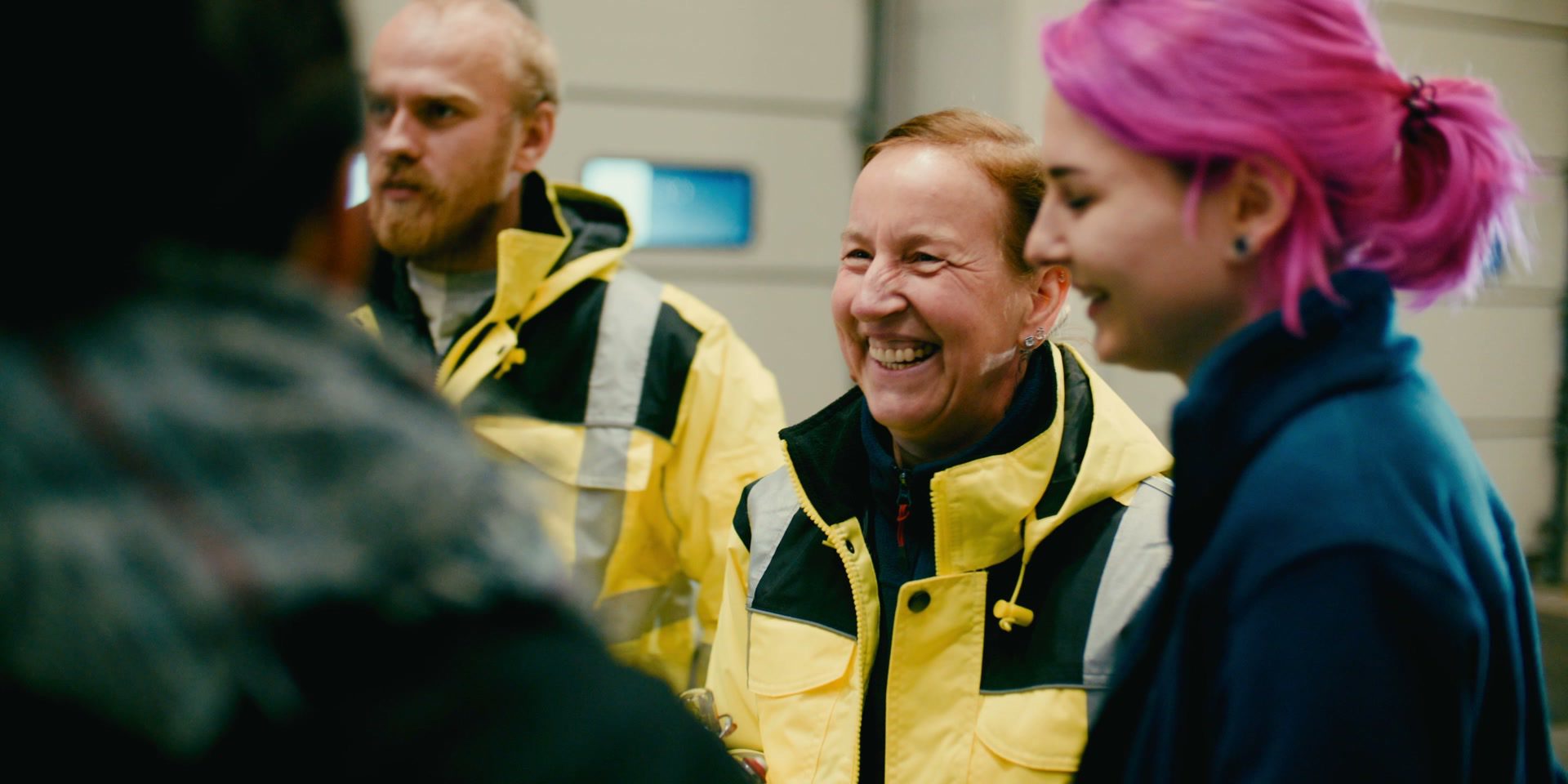
In the film, they explain themselves why they enjoy working there—without a script, in their own words. The most powerful line in the film comes from one of the employees: “Who wants to work for an insurance company?” She says she used to think she’d rather have become a lawyer. Today, she’s glad she stayed.
That's the trick. The film doesn't claim that the industry is exciting. It lets the skepticism be voiced and then has the industry's own people dispel it.
Which path is right for you?
| Entertain | Express doubts | |
|---|---|---|
| This works if | the job is invisible from the outside | the industry has a reputation |
| In front of the camera | Employees in Action | Employees in Conversation |
| Length | 30 seconds | two to four minutes |
| Channel | Social Media, Upside Down | Careers Page, LinkedIn |
| Risk | A joke with no point | Bulleted list without indentation |
Both approaches have one thing in common: real employees appear on camera. No actors, no models, and no executives speaking on behalf of the company.
Which industries stand to benefit
Recruiting through video is most effective in fields where the job appears misleading from the outside or isn’t visible at all. In industry and manufacturing, no one knows what the workplace is really like from the inside. In nursing and healthcare, the field’s reputation is worse than the reality of day-to-day work. In the public sector, the work is seen as dull.

How much does video-based recruiting cost?
The range is wide because the cost can be high or low. The GLX film was shot in a single day. A campaign involving multiple locations costs many times that amount.
You can find actual price ranges based on real offers on our page about the Recruiting Video Costs.
How to Get Started
First, sit down together. At GLX, the executive team, site management, and HR staff sat down together right from the start. Only then did the concepts take shape.
Then pick one spot—not all of them. The one that hurts you the most.
And keep this in mind for cell phones: keep it short, speak clearly, and make sure it’s understandable even without sound.

You can find out how we do this on our page about Recruitment Film Production.