
Promotional Video Concept: Template, Examples, and the Path to the Script
What goes into a promotional video concept, how a one-page outline becomes a script, and how much the concept phase costs. With a template consisting of twelve building blocks and examples from our own films.
A promotional video concept is the document that determines, before the first day of shooting, whether your film will be successful. It outlines what the film is intended to achieve, who it’s intended to reach, and what story it will tell. Everything that follows—from the script to the editing—is based on this single document. In this guide, we’ll show you what goes into a concept, how we develop concepts at ROCC Film, and how a single page of text becomes a finished film. We’ll include a fillable template and examples from our own productions.
What is a promotional video concept, and why do you need one?
The concept answers three questions: Why are we making this film? For whom? And how will we tell the story? It is not a screenplay, a shot list, or a budget estimate. It is the foundation for all of that.
Without a concept, a common mistake occurs: You shoot first and then try to find the message in the edit. Then you end up with a bunch of nice shots, and no one knows which ones belong in the film. With a concept, it’s the other way around. Every shot has a purpose before the camera even starts rolling.
For us, the concept is the starting point for every Corporate Film Production. During the initial meeting, we listen and ask what problem the film is meant to solve. This leads first to the concept, then to the screenplay.
From the Briefing to the Screenplay: What Documents Are Involved
There are many terms associated with this concept: treatment, synopsis, storyboard, shot list. These terms refer to different stages of the same process. Here’s how they’re related:
| Document | What's Inside | Who writes it | Scope |
|---|---|---|---|
| Briefing | Occasion, goal, target audience, budget, preferred date, examples you like | Yours, | A page or a conversation |
| Concept | Core message, narrative approach, dramaturgy, visual style, tone, length, formats, presentation | Production, together with you | One to three pages |
| Treatment | The Movie as a Continuous Narrative: How It Begins, What Happens, How It Ends | The production | One to two pages |
| Screenplay | Scene by scene: the video on the left, the audio on the right, including interview questions | The production | Two to six pages |
| Storyboard and Shot List | Sketches of the key shots and a list of all the settings for the day of filming | Directing and camera | As needed |
| Shooting schedule | Who is needed, when, and where | Production Management | One page per day of filming |
Not every promotional film requires all of these stages. A documentary film featuring interviews often doesn’t need a traditional script, but it does require a good interview guide. A staged brand film requires a script and a storyboard. The concept determines which steps are necessary for your project. We describe what comes after the concept—pre-production, shooting, and post-production—in the article How Does a Film Production Work?.
What Should a Promotional Video Concept Include? The Twelve Building Blocks
At ROCC Film, we use a modified version of this template for every project. Please copy it and fill it out as much as you can. We’ll clarify any remaining questions during our discussion. You’ll find a completed example below.
| Building block | Key Question | What Matters |
|---|---|---|
| 1. Occasion | Why now? What's supposed to change after the movie? | A relaunch, a new product, a reform, an anniversary. Without a reason, there’s no sense of urgency. |
| 2. Objective and Metric | How will you know in six months that the film has had an impact? | Inquiries, applications, length of stay, meetings with investors. One goal, not five. |
| 3. Target Audience and Viewing Situation | Who is watching, where, and on what device? | The buyer using a laptop looks different from the job applicant using a cell phone with the sound turned off. |
| 4. Key Message | What should the audience be able to say in one sentence after watching the movie? | One sentence. Not a tagline, not a slogan, but the viewer’s realization. |
| 5. Narrative Approach | What form does the message take? | Portrait, company feature, founder interview, documentary story, product in everyday life. |
| 6. Dramaturgy | How does the movie begin, where does it take a turn, and how does it end? | A ten-second introduction, a turning point, and a conclusion with a call to action. |
| 7. Main Characters and Filming Locations | Who is in front of the camera, and where? | Real people and real locations beat models and studio shots. Almost always. |
| 8. Visual Style and Tone | What does the movie look and sound like? | Lighting, color, camera movement, music, voice-over, or on-camera audio. Three sample videos are enough. |
| 9. Length and Formats | How long is the main film, and which edited versions do you need? | Main video in 16:9, plus cut-downs in 9:16 and 1:1 for social media. |
| 10th Edition | Where will the movie be shown during the first four weeks? | Website, LinkedIn, trade show, sales, internal. Each channel requires adjustments to length and editing. |
| 11. Budget and Schedule | How much can the film cost, and when does it need to be finished? | The budget determines the number of shooting days and the crew. The deadline determines the shooting schedule. |
| 12. Approvals | Who decides, and how many rounds are involved? | A decision-maker and fixed deadlines for feedback. Approvals are the biggest time-consuming factor in any production process. |
A good concept fits on one to three pages. If it's any longer, it usually includes the treatment.
The core message: one sentence that carries the entire film
Module four is the hardest. Most concepts fail here because the message is just a list or a sales pitch. A good core message is the insight the viewer takes away after watching the film. Here’s an example from our work for Commerzbank, broken down into four steps:
| Level | Core message | Problem |
|---|---|---|
| Weak | We have a new banking app with lots of features. | A product announcement. That's also mentioned in the press release. |
| Better | Our app makes banking easier. | Every bank claims that. It can't be proven or illustrated. |
| Good | The people who built the app show how it is changing everyday life. | It has protagonists and images. Still a bit long. |
| Strong | You explain software with people. | Six words. That's what the whole movie is based on. |
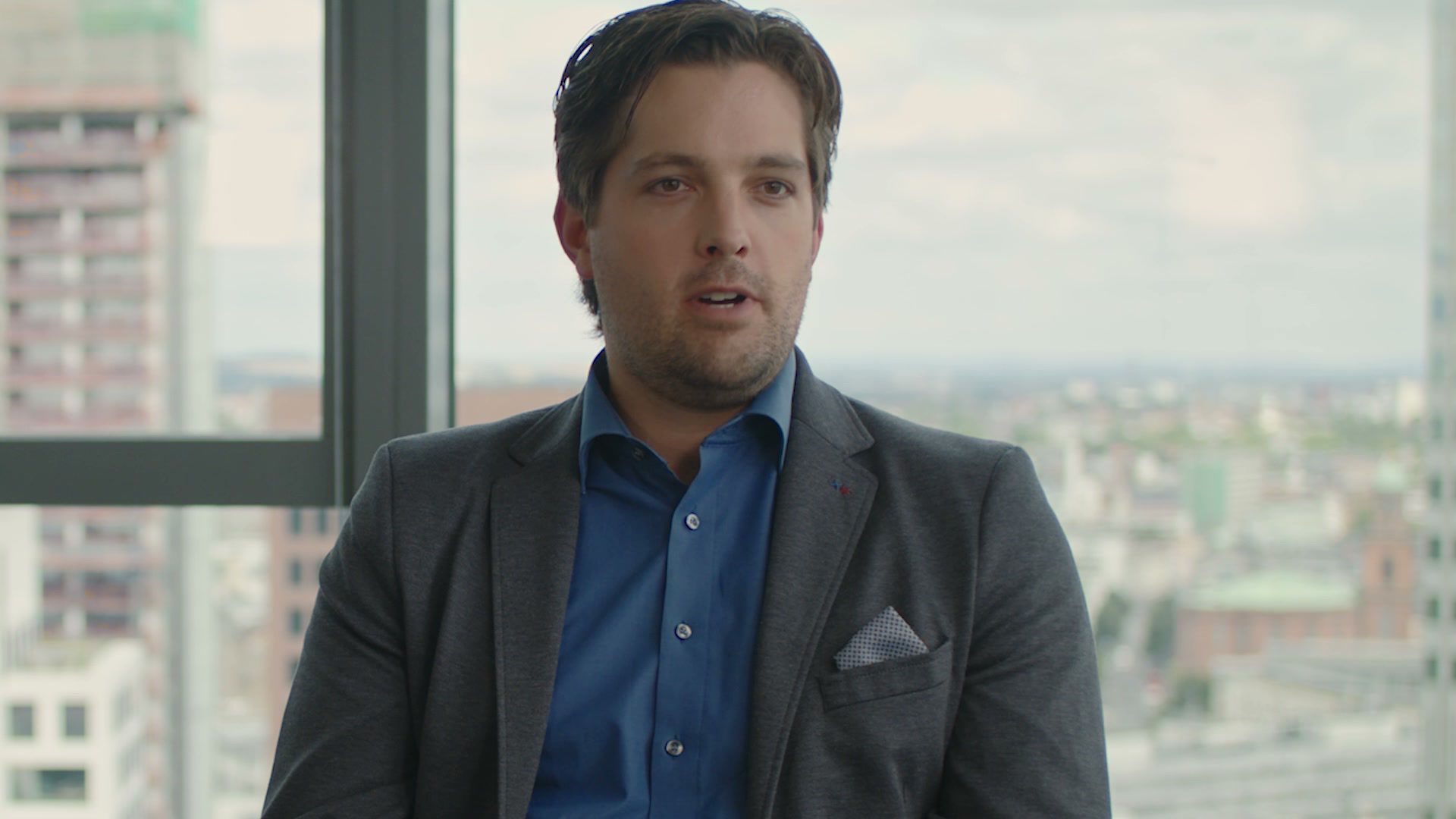
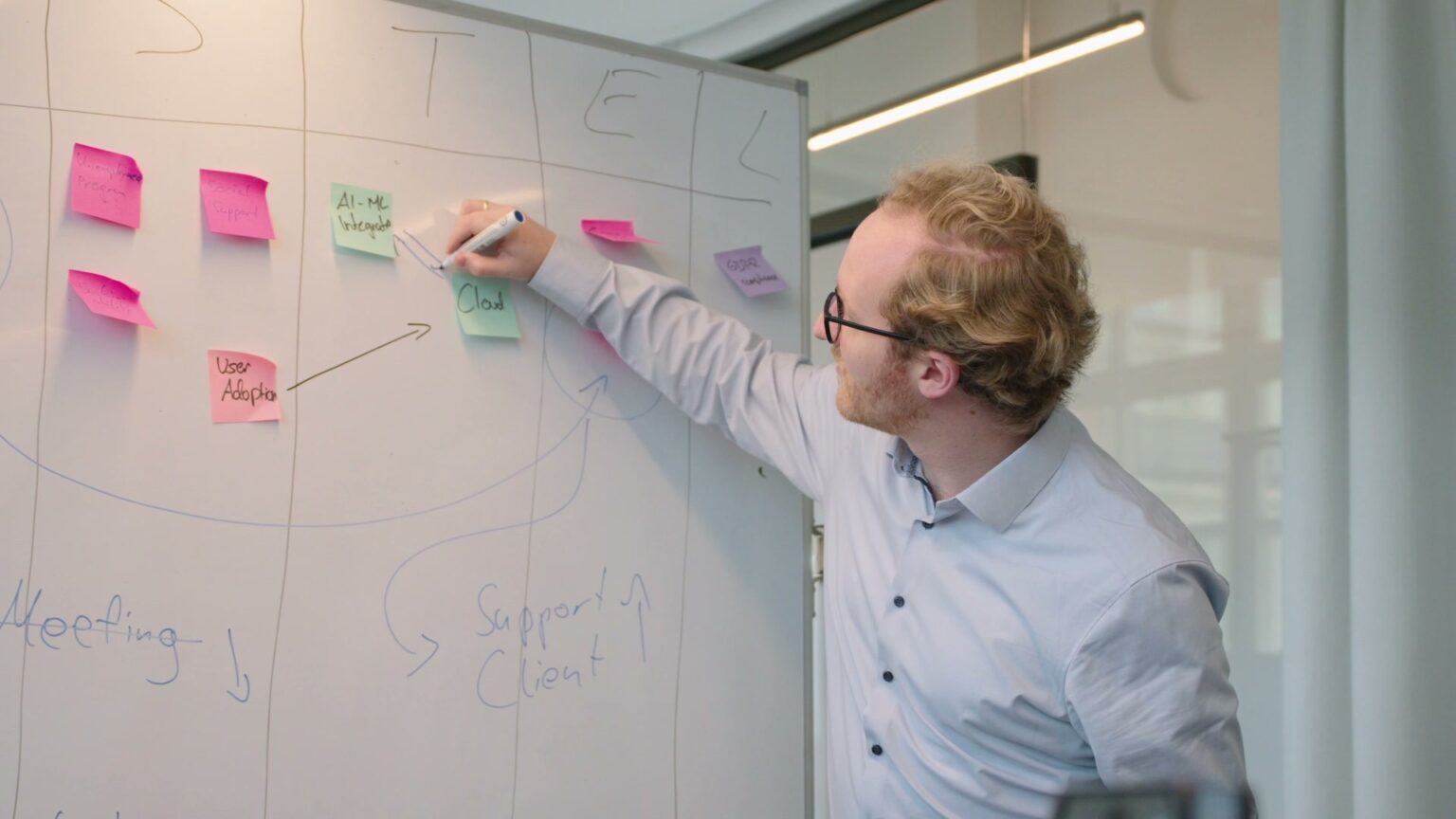
The fourth stage is the sentence that appears on the movie page. Everything stemmed from it: The teams behind the app explain it themselves in relaxed interviews set against the Frankfurt skyline. In between, we see scenes from everyday life—such as buying a bicycle using a real-time bank transfer. The features aren’t simply listed; instead, they’re translated into moments.
The test for your core message: Can you convey it with a single image? If not, it’s still just a tagline—not a message.
What conceptual approaches are there?
Module Five explores form. Six approaches cover almost everything we've filmed over the past twenty years. For each one, there's a film in which it worked.
The Portrait with a Shift in Perspective
One person is the focus of the film, but the perspective is different than expected. For DKMS, we filmed the story of a patient and his family. For eight years, DKMS films focused on the struggles of those affected. In this film, the focus shifted to the efforts of the people around him. The concept centered precisely on this change in perspective. It’s a good fit if your topic has been covered many times before and you need a fresh perspective.
The Business Rather Than the Company
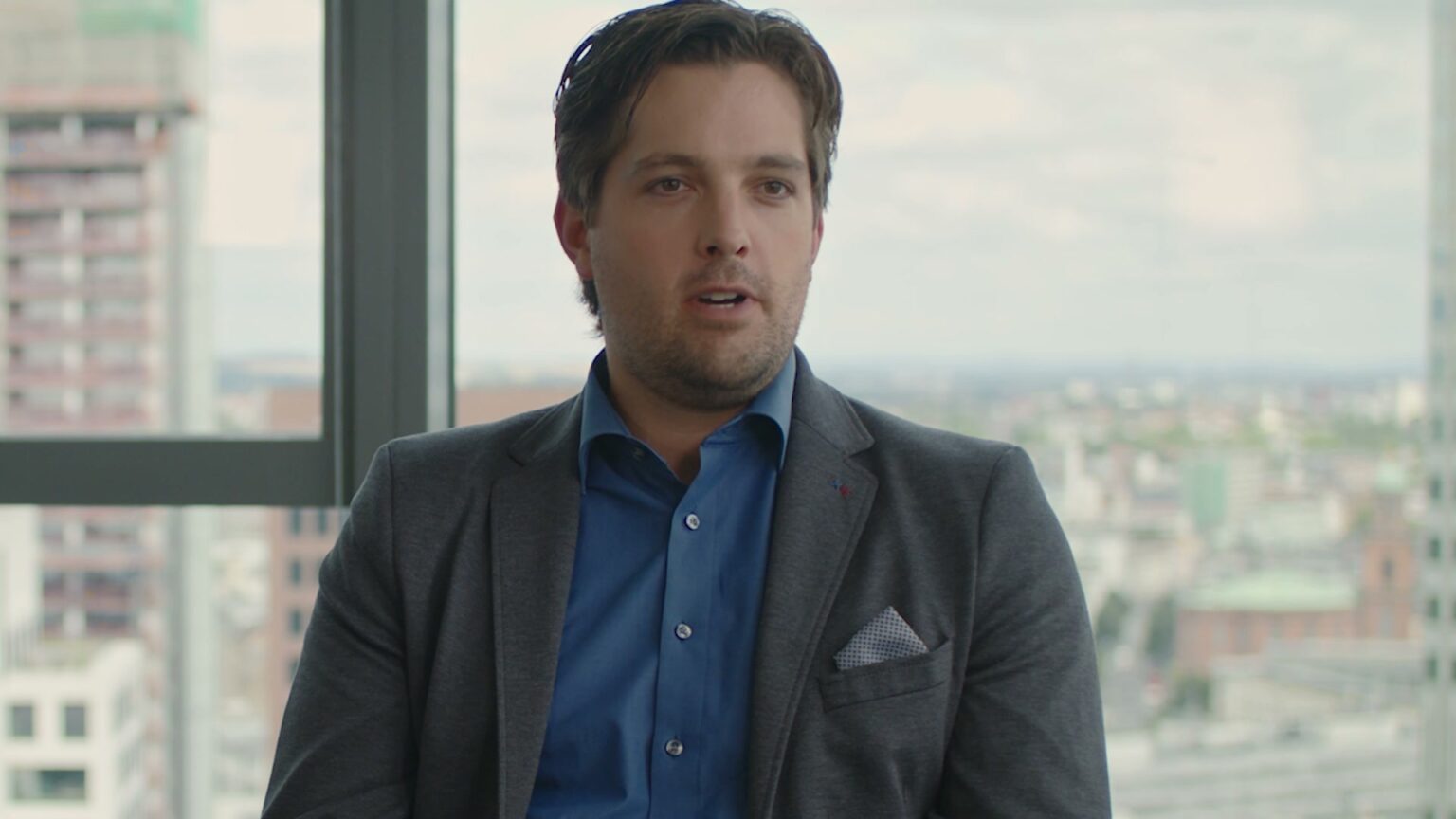
For the tech agency Berlin Bytes, we didn’t film the company itself, but rather its day-to-day operations: from breakfast through the evening, product ideas on Post-its, KPIs on the whiteboard, and development on the computer. The question behind the concept: Do I want to work with these people? The film answers it before anyone has to ask. It’s a great fit for service providers whose product you can’t physically hold in your hands.
The founder shares their story
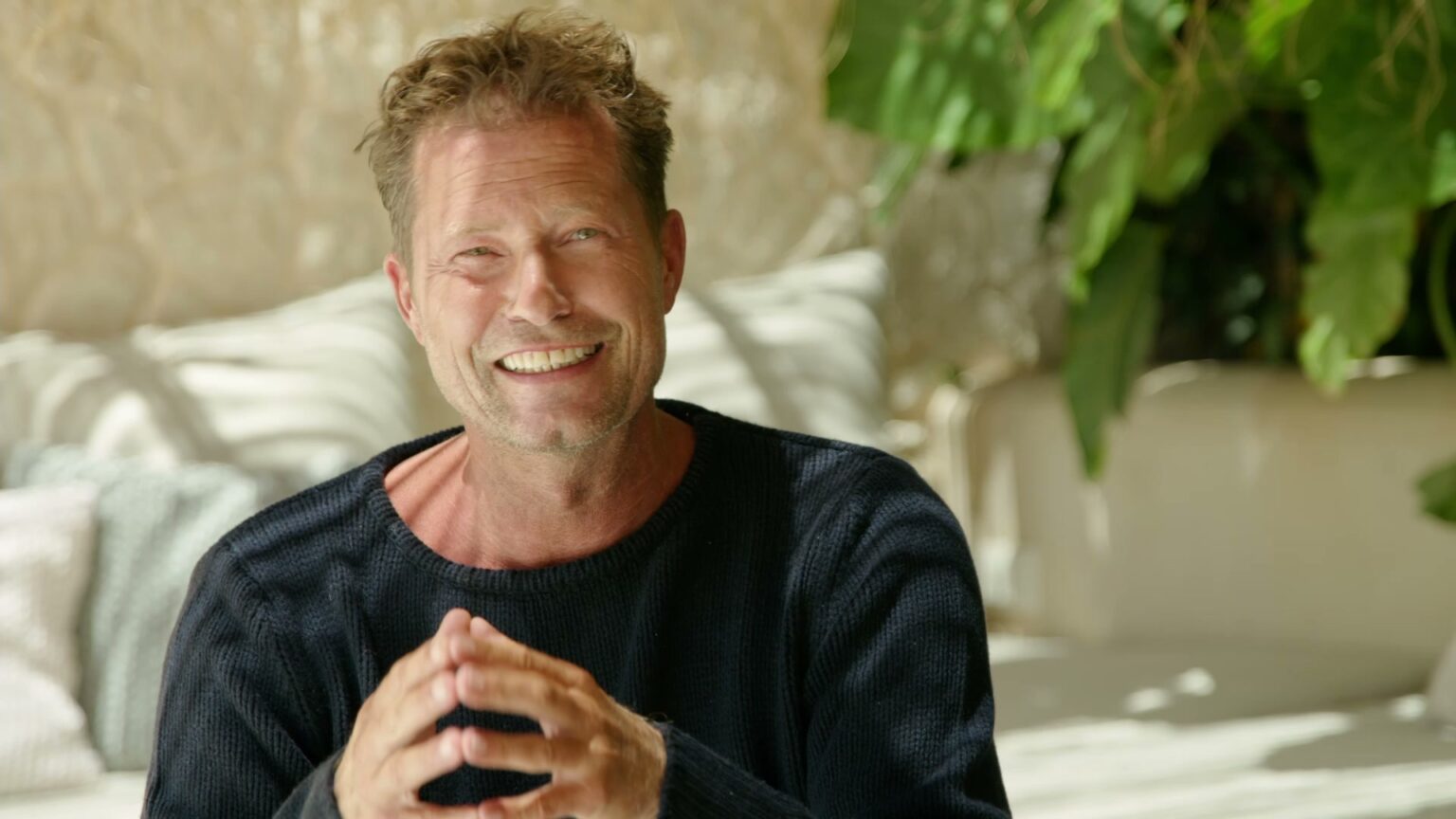
For Barefoot Living, a sit-down interview with Til Schweiger served as the centerpiece of the entire brand relaunch. Two days of filming in Mallorca, a founder telling his own story, plus a glimpse into daily life at two fincas. This approach works well for brands with a face that the target audience knows—or is meant to get to know.
The Documentary History
For the BMAS, we told the story of the “Zwischenstopp in Sachsen” project. This success story conveys a message: a man who, after overcoming addiction, found his way back to everyday life and work. Before that, there were hours of preliminary discussions with the job center, the clinic, and the project management team until all the details were in place. No one was given questions in advance—they were simply conversations. This approach works well when your topic is complex and requires trust.
The Product in Everyday Moments
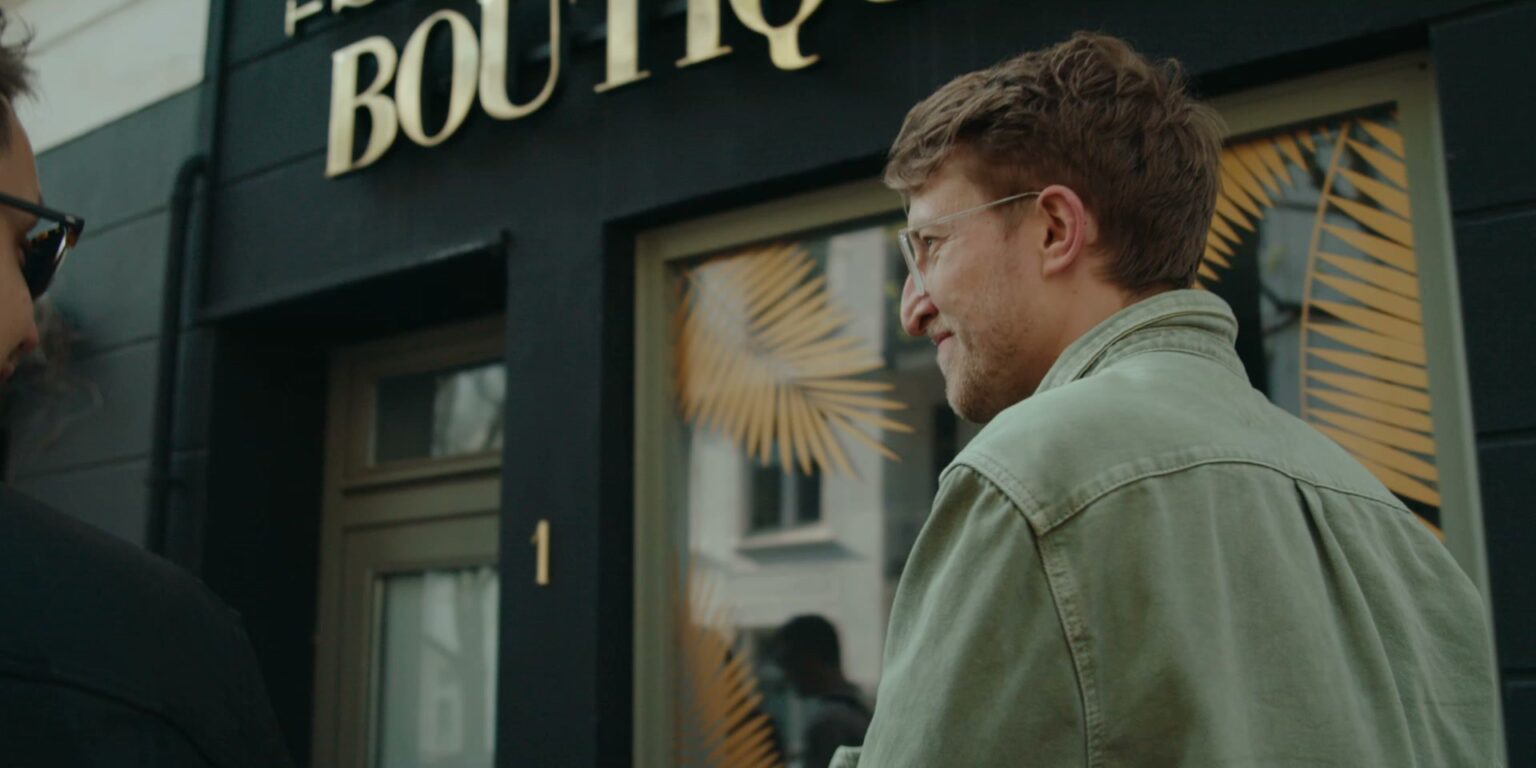
We didn't explain the Commerzbank app—we translated it into scenes. For example, the moment when the bike has already been paid for. It works for software, apps, and everything that happens on the screen.
The umbrella brand without a location
The Viona Network brings together over 150 educational providers. The film deliberately does not show any single location, but rather situations that occur throughout the network: live classes, learning at the kitchen table, and counseling. To achieve this, we set up a learning studio, furnished an apartment, and cast about 15 actors and actresses. Ideal for associations, networks, and franchise systems where all partners need to see themselves reflected.
A seventh approach is more typical of a recruitment film, but it shows just how far a concept can go: genre appropriation. For GLX, the high-bay warehouse became a racetrack—31 seconds of racing cinema featuring forklifts. A creative workshop yielded four conceptual directions; GLX chose number four. The video generated 400 applications in three months.
Promotional Video Concept Example: A Concept Read Backward
This is what the completed template looks like. We’re using the Commerzbank film because all the relevant facts are listed on our film page. We worked backward from the finished film to develop the concept and broke it down into the twelve building blocks.
| Building block | Commerzbank Mobile Banking App, 2019 |
|---|---|
| 1. Occasion | The bank had completely rebuilt its mobile banking app. Now it was time to let everyone know. |
| 2. Goal | Promote the new app internally and externally at the same time. |
| 3. Target Audience and Viewing Situation | Two target audiences: the company's own employees and customers outside the company. The full-length film on the computer, shortened versions on the cell phone. |
| 4. Key Message | You explain software with people. |
| 5. Narrative Approach | The product in everyday life. The teams behind the app explain it themselves. |
| 6. Dramaturgy | Calm, sit-down interviews interspersed with everyday life: the Frankfurt skyline in the morning, buying a bike via real-time bank transfer, a walk in a Berlin park. |
| 7. Main Characters and Filming Locations | Product owners, developers, and designers at the bank—not models. Frankfurt am Main and Berlin. |
| 8. Visual Style and Tone | Interviews against the skyline, B-roll at 50 frames per second, animated app screens as a separate layer over the footage. |
| 9. Length and Formats | Main video: 2:26 minutes, plus cutdowns and social media snippets from the same shoot. |
| 10th Edition | Internal and external. |
| 11. Budget and Schedule | Two and a half days of filming—two in Frankfurt and half a day in Berlin. Most of the budget was deliberately allocated to B-roll. |
| 12. Approvals | Direct commission without an agency. One decision was left in the film: a visible tattoo on one of the employees was not retouched out. |
Two aspects of this example are typical of a good concept. First, the budget decision in module eleven: it’s better to get one item right than to save a little here and there. Second, the approval in module twelve. The fact that the tattoo stayed in the shot was the bank’s decision. It’s exactly these kinds of decisions that distinguish a commercial from a film you actually believe in.
How a Concept Becomes a Screenplay
The concept explains what the film is about. The treatment describes how it feels. The screenplay details what can be seen and heard in each scene. Using Module Six of the Commerzbank concept as an example, here are some sample lines of how we would write it:
Treatment, excerpt: The film opens with the Frankfurt skyline bathed in morning light. A developer sits looking out over the city and explains what makes her proud of the new app. We cut to everyday life: a man buys a bicycle, and the bank transfer goes through in real time before he leaves the store. Back to the interview. The film continues to alternate between people and moments until it ends with a walk in a Berlin park.
| Scene | Image | Sound |
|---|---|---|
| 1 | Frankfurt skyline, wide shot, morning light, camera on a slider | The music starts softly; there are no lyrics |
| 2 | Interview, medium close-up, developer in front of the skyline | Interview question: When did you feel the app was finished? |
| 3 | Bicycle shop, hands on the cell phone, then the bike on the street, slow motion | Original audio from Scene 2 continues to play; the app screen fades in as an animation |
The camera crew derives the shot list from the script: Scene 3 requires a wide shot of the store, a close-up of the hands, and a tracking shot alongside the bicycle. Three shots, estimated at 40 minutes of filming time. This turns the concept into a day of shooting that can be planned.
In documentary films, an interview guide replaces the script. For the BMAS film about the stopover, there were no pre-determined questions—just conversations. The concept had established in advance which elements needed to be included in the film, such as the project’s funding. The precision came from the concept; the warmth came from the conversation.
Who writes the proposal, how long does it take, and how much does it cost?
Who: The briefing comes from you. You know why you need the film and what needs to change. We’ll write the concept together with you. At ROCC Film, founder Christian Martin Schäfer develops the concept himself and remains your point of contact until final approval. You approve it before the treatment and screenplay are written.
How long: The concept and pre-production phases typically take one to two weeks. The entire production process usually takes four to six weeks. What prolongs the concept phase is almost never the writing itself. It’s the approval process. Having a decision-maker and a fixed deadline for feedback saves more time than any template.
How much it costs: At ROCC Film, the concept is included in every corporate video. Corporate videos start at 8,000 euros net: one day of filming, plus concept, editing, color correction, and music. Of a typical budget, about 15 percent goes toward the concept and pre-production, around 50 percent toward filming, and about 30 percent toward post-production. You can find the detailed breakdown on our page about the Brand film costs.
The best ideas come when the team that will eventually shoot the video is involved from the very beginning. If you still only need help with the concept phase, just ask us. We'll give you our honest opinion on whether that makes sense.
The Most Common Mistakes in Promotional Video Concepts
- Five messages instead of one. The film is meant to showcase the product, the team, the location, sustainability, and the company's history. In the end, nothing really sticks.
- Target audience: everyone. A movie meant for everyone appeals to no one. If you don't understand the viewing context, you'll end up making the wrong movie.
- The product catalog as a video. A list of features is not a concept. Commerzbank didn't just list its app features—it translated them into moments.
- Employees who read texts aloud. As soon as a line is read aloud, you can hear it. Conversations instead of scripts, just like in the BMAS film.
- The concept ends with the shoot. Formats, channels, and cutdowns belong in the concept, not in the post-production review. For Barefoot Living, two days of filming yielded the main film, social media versions in 9:16 and 1:1, product videos, and the photos for the homepage.
- No approval chain. If three departments end up having a say, the plan will fall apart at the last minute. Make sure to clarify in advance who makes the final decision.
- The conclusion, offered without being asked. Every promotional video ends with the next step: contact, application, website, or interview.
- The budget is a little bit here and there. Better to get one thing right: In the Commerzbank film, most of the footage was intentionally used as B-roll so that every euro would be clearly visible on screen.
Frequently Asked Questions About the Promotional Video Concept
What is the difference between a concept and a screenplay?
The concept answers the "why," "who," and "how": objective, target audience, core message, narrative approach, and visual style. The script describes, scene by scene, what is seen and heard, right down to each individual interview question. First comes the concept, then approval, then the script.
How long should a promotional video concept be?
One to three pages. The twelve sections listed above will fit on one page if you keep them concise. The treatment and screenplay will be added later and will be longer.
How long does it take to develop a concept for a promotional video?
It takes us one to two weeks, including pre-production, depending on how complete the briefing is and how quickly we receive your approvals. The approvals are the biggest time factor.
How much does a corporate video concept cost?
At ROCC Film, this is included in every production with a budget starting at 8,000 euros (net). Concept development and pre-production account for about 15 percent of a typical budget. You can find all the rates on the website How much does a promotional video cost?.
Can we write the concept ourselves?
The briefing and the core message should come from you—no one knows your company better. It’s best to leave the narrative approach, structure, and script to the production team, who will handle the actual filming later. Use the template above as your briefing, and then we’ll discuss the rest.
What is a treatment for a corporate video?
The treatment is the film written out as continuous text, one to two pages long: how it begins, what happens, what it feels like, and how it ends. It falls somewhere between a concept and a screenplay, and it’s the document you can most easily share with your colleagues.
Does a documentary promotional film need a script?
No, but a concept and an interview guide. The concept specifies which themes must be included in the film. The interviews themselves remain open-ended. That’s how the film about the “Zwischenstopp” project for the BMAS came to be.